What Kind of Witch Am I?
Not a personality quiz. A real sorting tool, drawn from the 10 traditional witch types — Eclectic, Folk, Kitchen, Hearth, Secular, Water, Dragon, Hedge, Cosmic, Green.
25 questions. A primary type and a shadow type. A personalized reading at the end, written in real time based on what you actually answered.
No signup. No email. No spam. Just the quiz.
What Is a Witch Type?
A witch type is a recognized framework for sorting witchcraft practice by its primary source, its tools, and its relationship to spirit — not by morality, lineage gatekeeping, or aesthetic. The types describe how someone practices, not whether they're "a real witch."
The 10 types used in this quiz are the ones the practicing witchcraft community actually uses. They appear across modern grimoires, witchtok content, the spells8 framework, and forum communities like r/witchcraft and r/SASSWitches. They're not made up for a personality quiz. They describe the actual texture of contemporary practice.
Most witches don't fit one type cleanly — most operate from a primary type with a secondary type running underneath. A Folk Witch with a Cosmic shadow practices the lineage her ancestors gave her but checks the planetary hours before she does. A Kitchen Witch with a Hedge shadow tends the stove all day and crosses into spirit at 3 AM. The combinations are the truth of practice.
The 10 Witch Types by Source of Magic
The types group naturally by what powers them: the land, the home, an element or spirit realm, or the practitioner's own will and method.
- Green WitchPlants and seasons run the program. Phenological practice — what's blooming, what's dying, what the land asks.
- Folk WitchAncestry and locality. The dead taught her. Geography is grimoire.
- Kitchen WitchThe stove is the altar. Magic is indistinguishable from feeding people you love.
- Hearth WitchThe whole house is a charged container. Sweeping is banishment. Threshold is ward.
- Water WitchCalibrated to emotional and energetic currents the way some are calibrated to weather.
- Hedge WitchWalks the boundary between the living world and what's past it. Hedge-rides into spirit.
- Cosmic WitchThe sky is primary text. Planetary hours, retrograde timing, natal chart as spell architecture.
- Eclectic WitchPulls from every system that calls. Her practice is her own archaeology.
- Secular WitchDone with the gods question. Practice built on chaos magic, ritual neuroscience, and observable results.
- Dragon WitchWorks with draconic entities as partners. The most demanding tradition; smallest community.
Every Witch Type, Explained
Tagline, vibe, strengths, shadow side, and cultural references for each type.
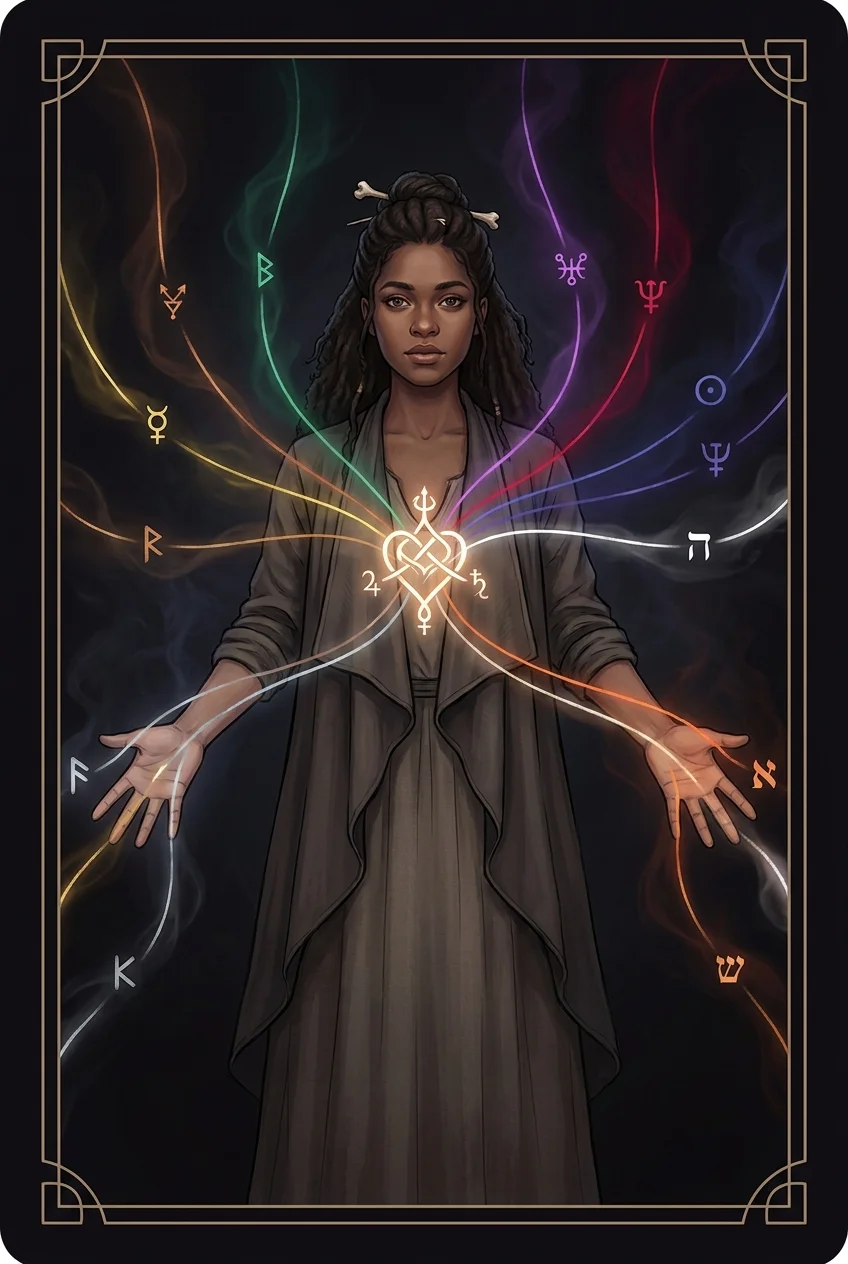
Eclectic Witch
"The whole shelf is the tradition."
An Eclectic Witch pulls from every system that calls to her — a Norse rune beside a Santería prayer candle beside a chaos sigil scrawled in ballpoint on a napkin. No teacher issued her a curriculum; her practice is her own archaeology. Her bedroom looks like five traditions survived a shipwreck and built something new together.
- →Synthesizes across systems with no cognitive dissonance
- →Adapts to the energy of the moment, not the rules of the manual
- →Builds a practice that fits her specific life and psychology
Gets so busy collecting that nothing goes deep. The shelf is impressive. The roots are shallow.
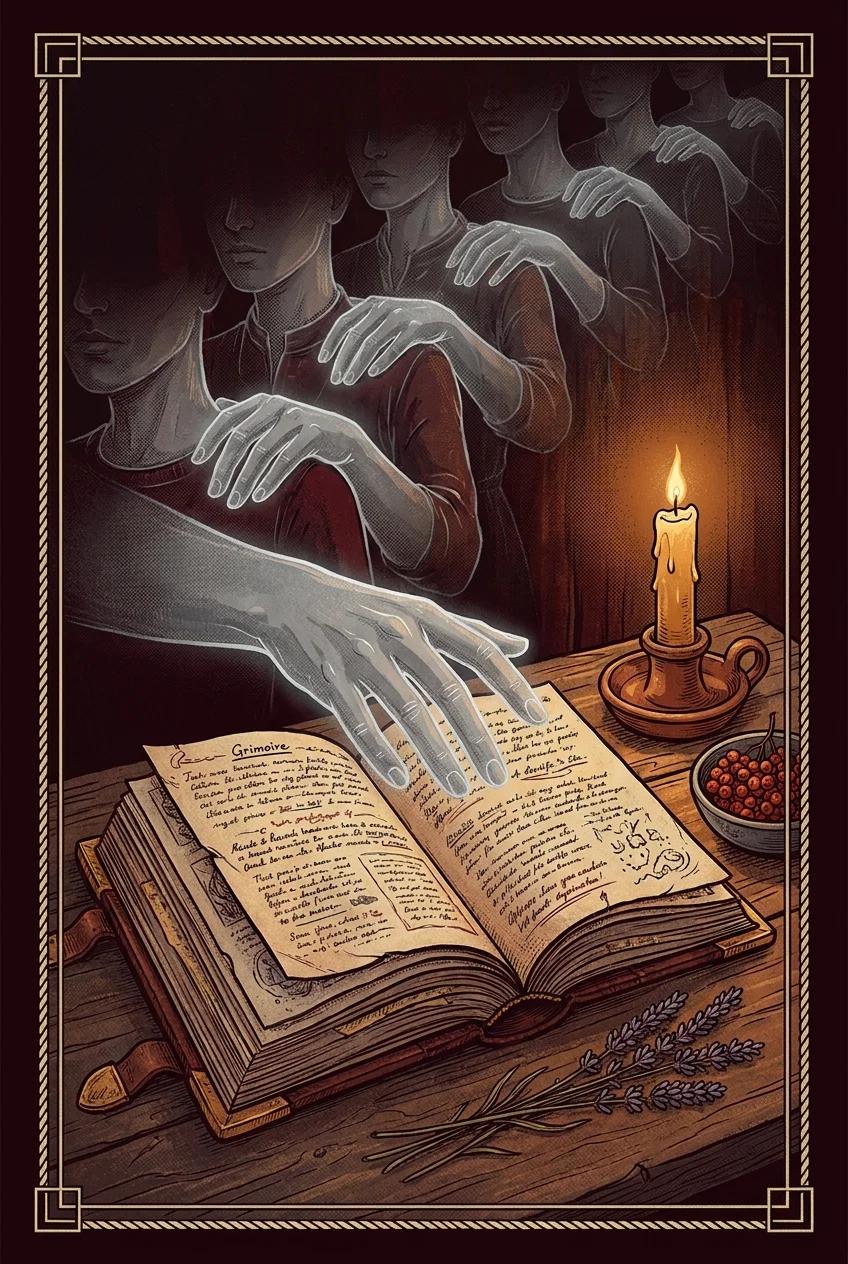
Folk Witch
"The dead taught her everything she knows."
A Folk Witch roots her craft in the land she stands on and the blood that put her there — Appalachian granny magic, Slavic village charms, Southern conjure, Italian mal'occhio counterspells. Her magic is the kind that was whispered over sick children and nailed to barn doors. Photograph of a grandmother on the altar. Murder ballads on the playlist.
- →Magic with actual historical teeth — not invented last Tuesday
- →Deep animism; she knows the spirit of the specific crossroads on her road
- →Ancestor work makes her craft cumulative — she stands on shoulders
Can calcify into gatekeeping — 'you have to have the blood' energy. Or so reverent of the old ways the tradition goes brittle.
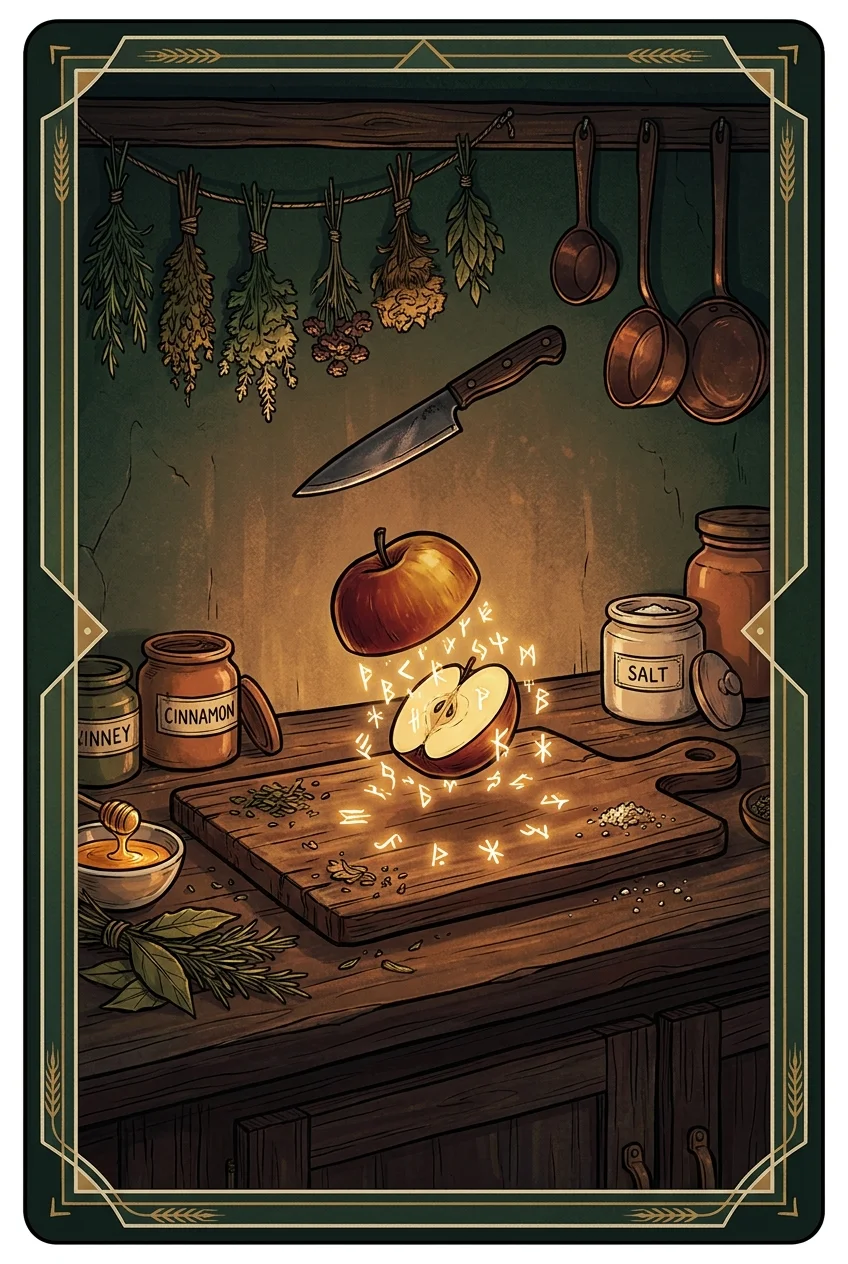
Kitchen Witch
"Every meal is a spell she wrote herself."
A Kitchen Witch turns the stove into an altar without any ceremony about it. Rosemary into the stock for protection, honey stirred clockwise for sweetness, bread left to rise under moonlight without anyone being told about it. Her grimoire looks like a recipe book. Her magic smells like garlic and woodsmoke and something citrus.
- →Magic indistinguishable from feeding people you love
- →Deeply grounded — nourishment is the foundation, not the edge case
- →Knows the materia magica of her pantry better than most witches know their tools
Can disappear into service — pours everything into feeding others and forgets to keep any for herself. The cauldron goes empty.
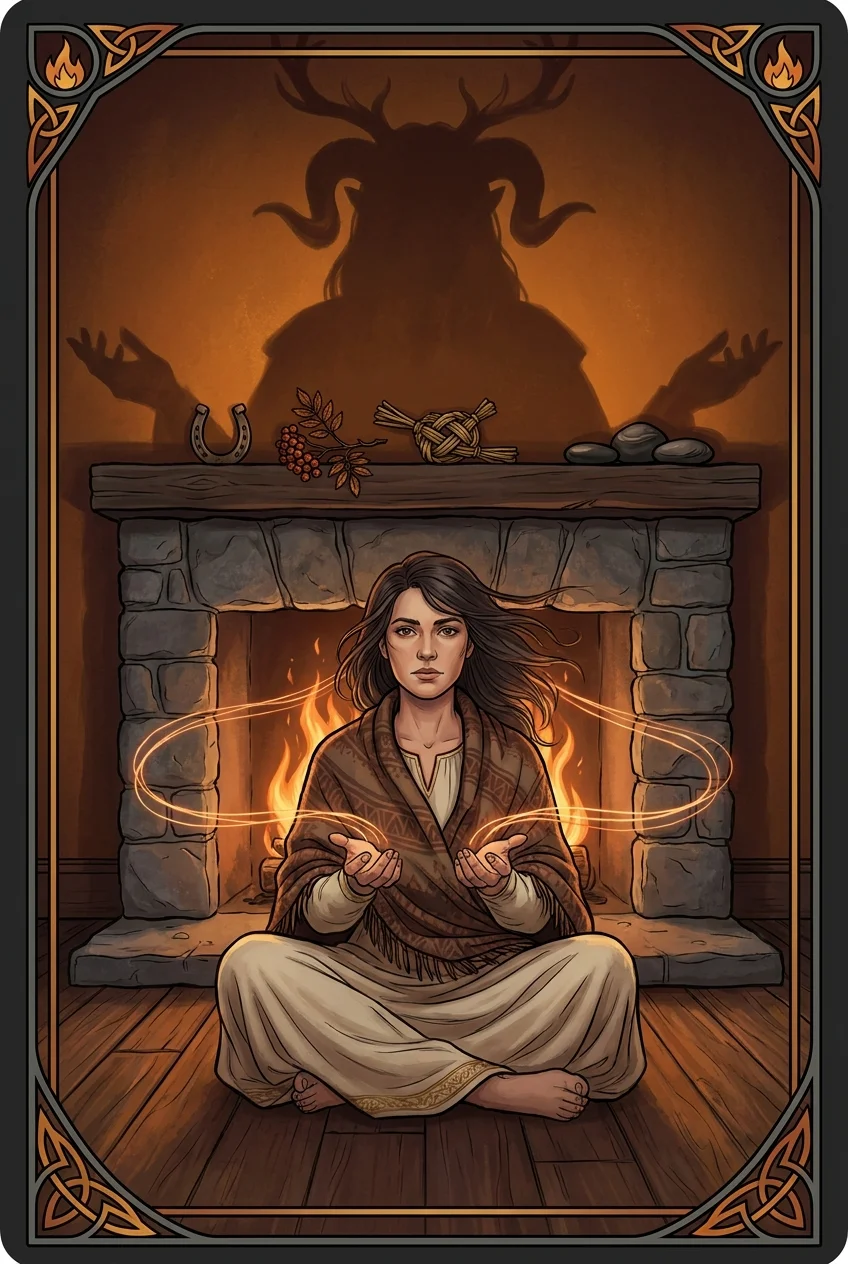
Hearth Witch
"Home is the spell. She just keeps it burning."
Less focused on food, more focused on the house itself as a living magical entity. Every room has a function that doubles as a ward. Sweeping is banishment. Candle placement is intention-setting. The threshold gets smudged on the first of every month without exception.
- →Radical domesticity as an act of power, not submission
- →The home holds charge like a battery
- →Hospitality and protection are fused — guests feel it without knowing why
Can become unable to leave. The home becomes fortress becomes prison. Or perfectionism — if the wards aren't exact, the whole container feels unsafe.
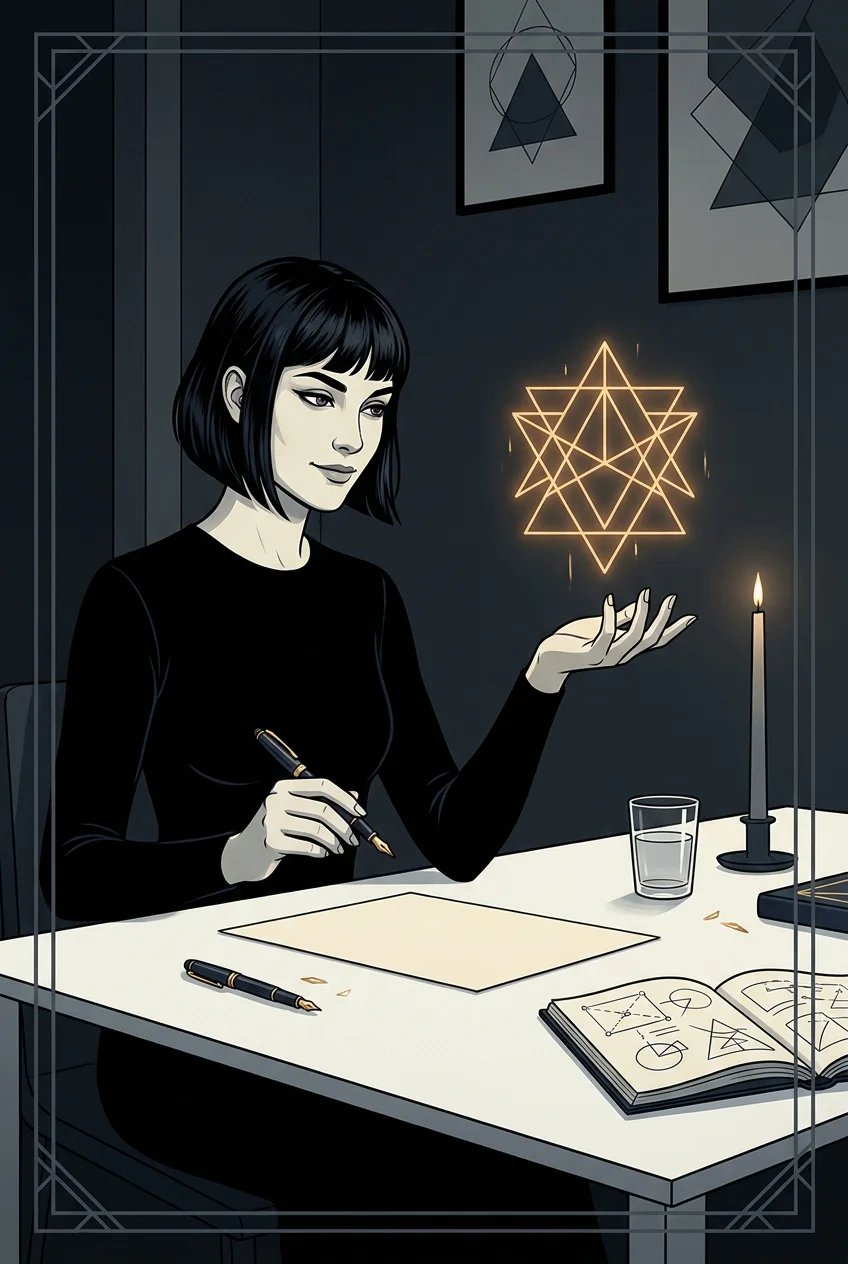
Secular Witch
"The sigil works. She doesn't need to know why."
Done with the gods question. Practice built on psychology, neuroscience of ritual, chaos magic principles, and the observable fact that intention changes outcomes. She approaches the craft like an engineer — not with less reverence, but with a different rigor. Clean lines. One carefully chosen crystal. Notebooks full of sigils.
- →Brings rationalist rigor to intuitive practice without destroying either
- →Immune to the spiritual abuse cycles that plague deity-based communities
- →Magic as self-psychology — understands how ritual rewires the practitioner
Can get cold. Ritual becomes a productivity hack. Disenchantment dressed as sophistication.
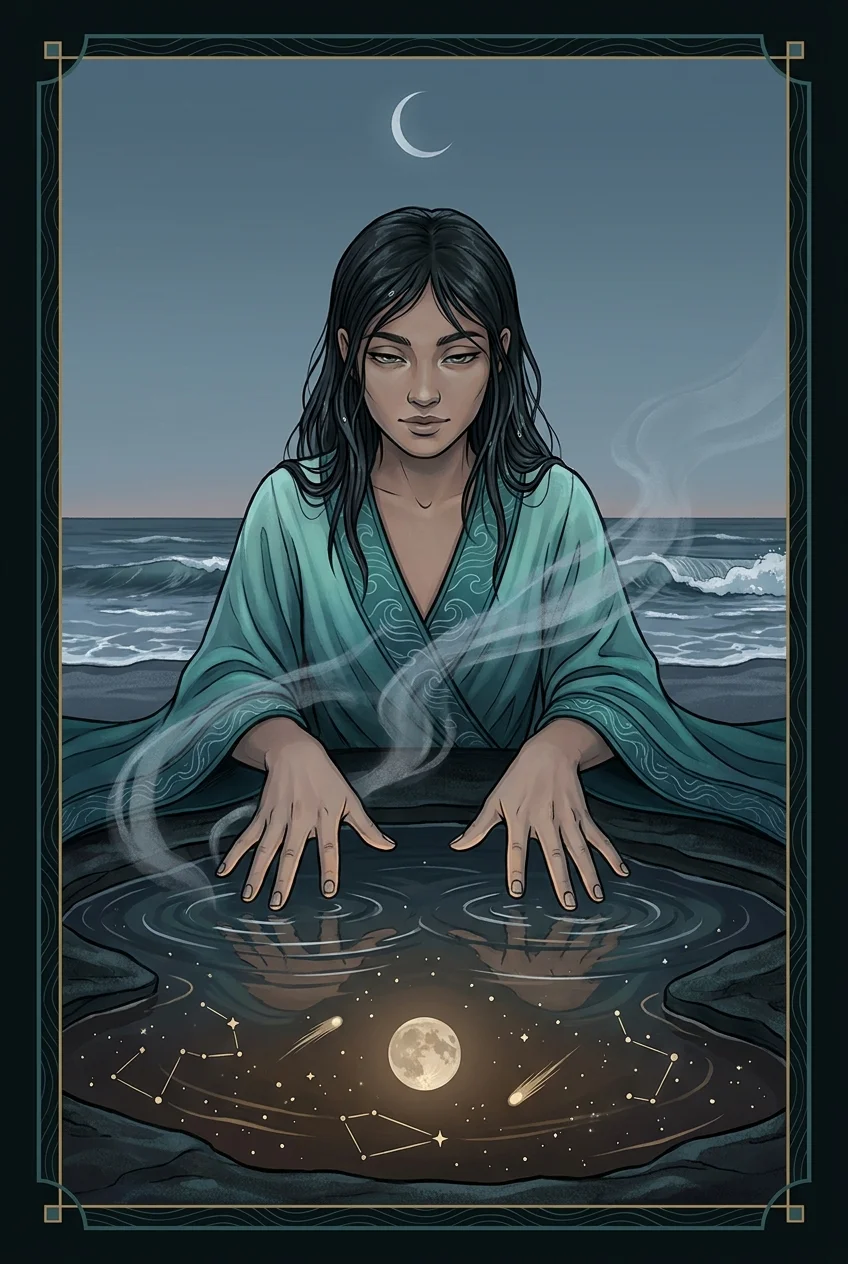
Water Witch
"She reads the room the way the sea reads the shore."
A Water Witch is calibrated to emotional and energetic currents the way some people are calibrated to weather. Her practice centers on scrying, emotional alchemy, moon work, and the kind of divination that requires she be very, very still. Tidal charts pinned next to the moon calendar.
- →Reads emotional currents like weather patterns — feels what's coming before it arrives
- →Moon-cycle attuned by default, not by discipline
- →Empathic magic — her healing work is surgical because she finds the actual wound
Gets pulled under by other people's emotional weather. Loses the shore. The empathy that makes her effective becomes the drain that hollows her out.
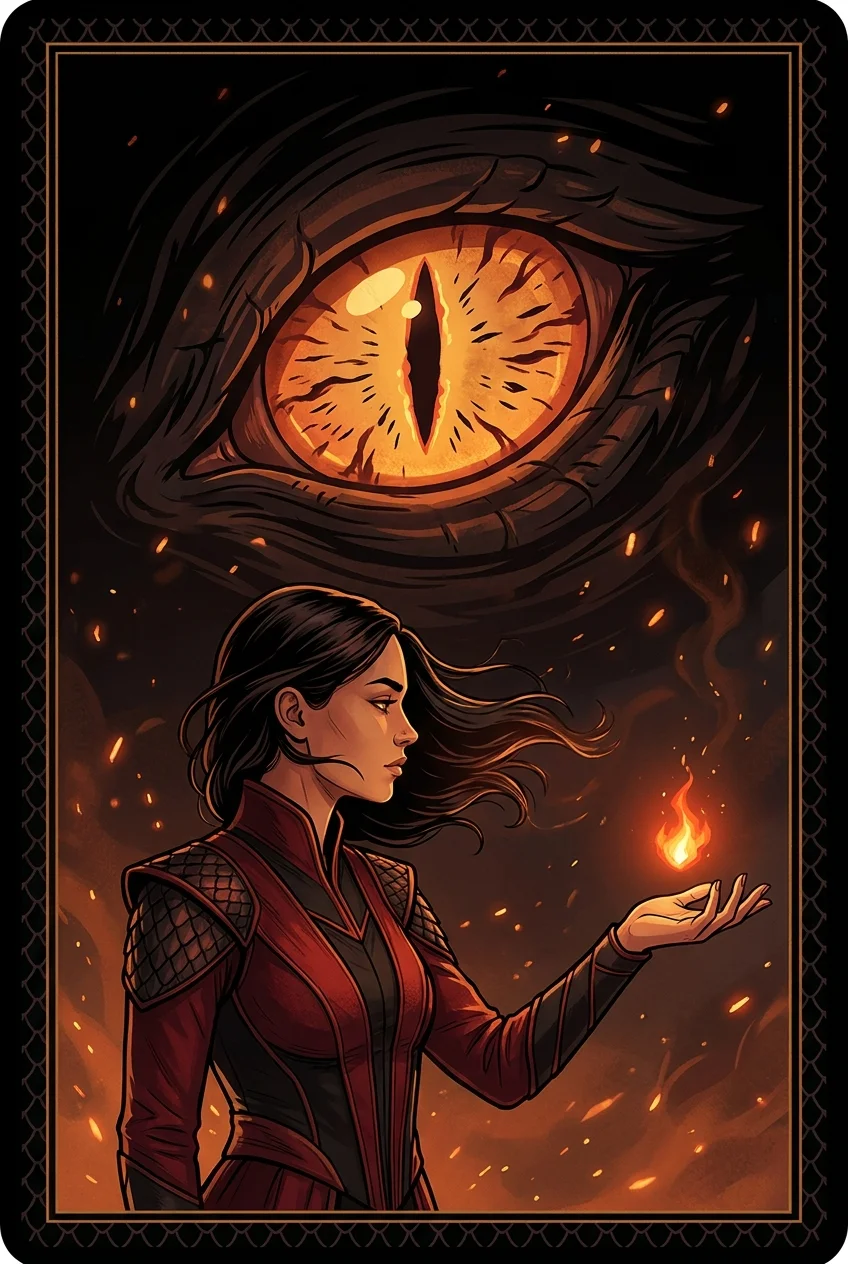
Dragon Witch
"She doesn't call power. Power negotiates with her."
A Dragon Witch works with draconic entities as partners, guardians, and teachers — not pets, not metaphors. The relationship is demanding and reciprocal: dragons test worthiness, and she has passed. Her bedroom is imposing. Dark metal, bone, volcanic stone, things with teeth.
- →Direct connection to ancient, non-human wisdom
- →Magic lands with unusual force — she doesn't petition, she co-creates
- →Protection work and banishing are particularly powerful in this tradition
The pride that passes for power. Dragon energy amplifies whatever you bring — arrogance gets scaled up fast. Can develop a superiority complex toward other practitioners.
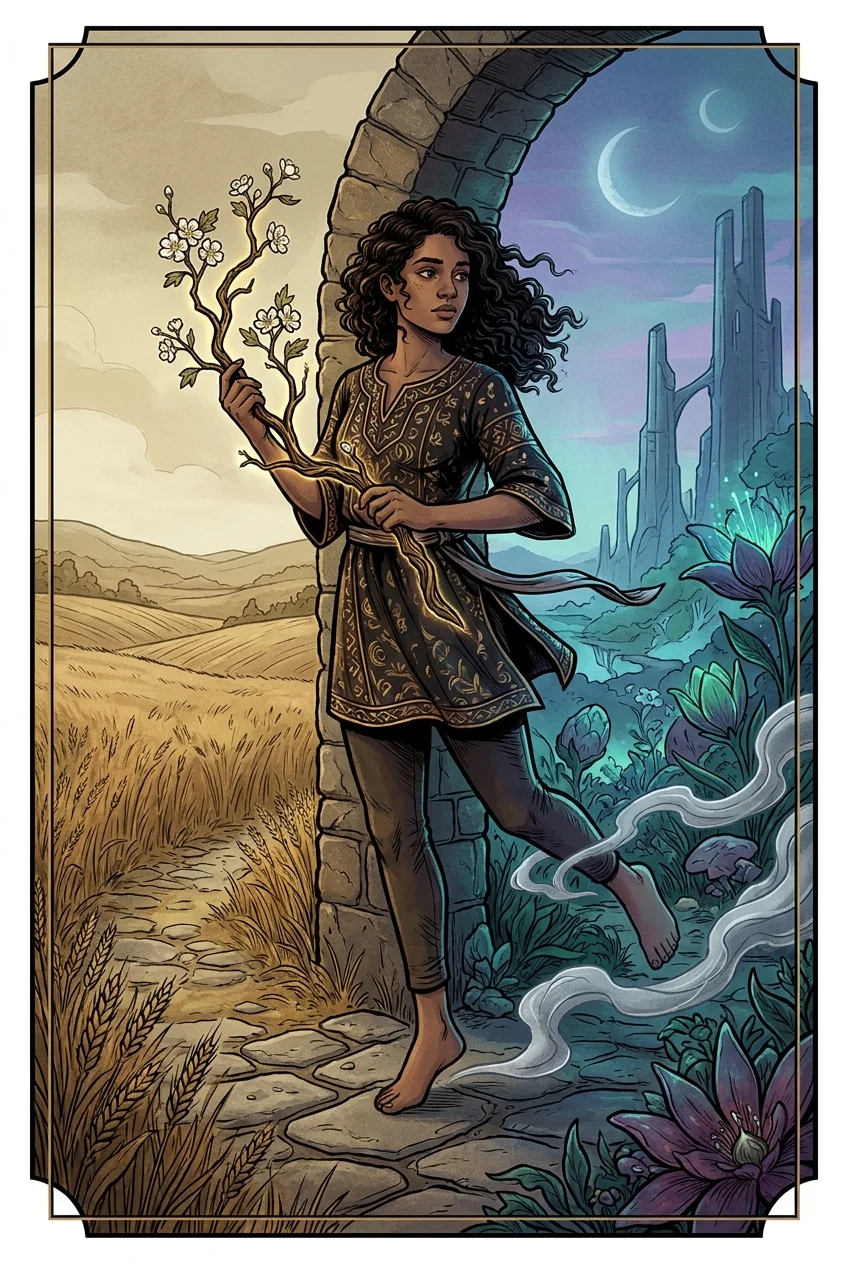
Hedge Witch
"She left one world to find the next one."
Walks the boundary between the living world and whatever is past it. The 'hedge' is the literal threshold — the liminal edge of the village where the managed world ends and the wild begins. She crosses it deliberately, in trance, in dream, in the particular quality of attention that makes the unseen visible.
- →Direct access to spirit communication without institutional mediation
- →Psychic sensitivity is native, not cultivated through effort
- →Ancestral work comes naturally — she can find the dead
The hedge is also a threshold you can lose yourself past. Too long in the liminal and the grounded world starts to feel thin and unreal.
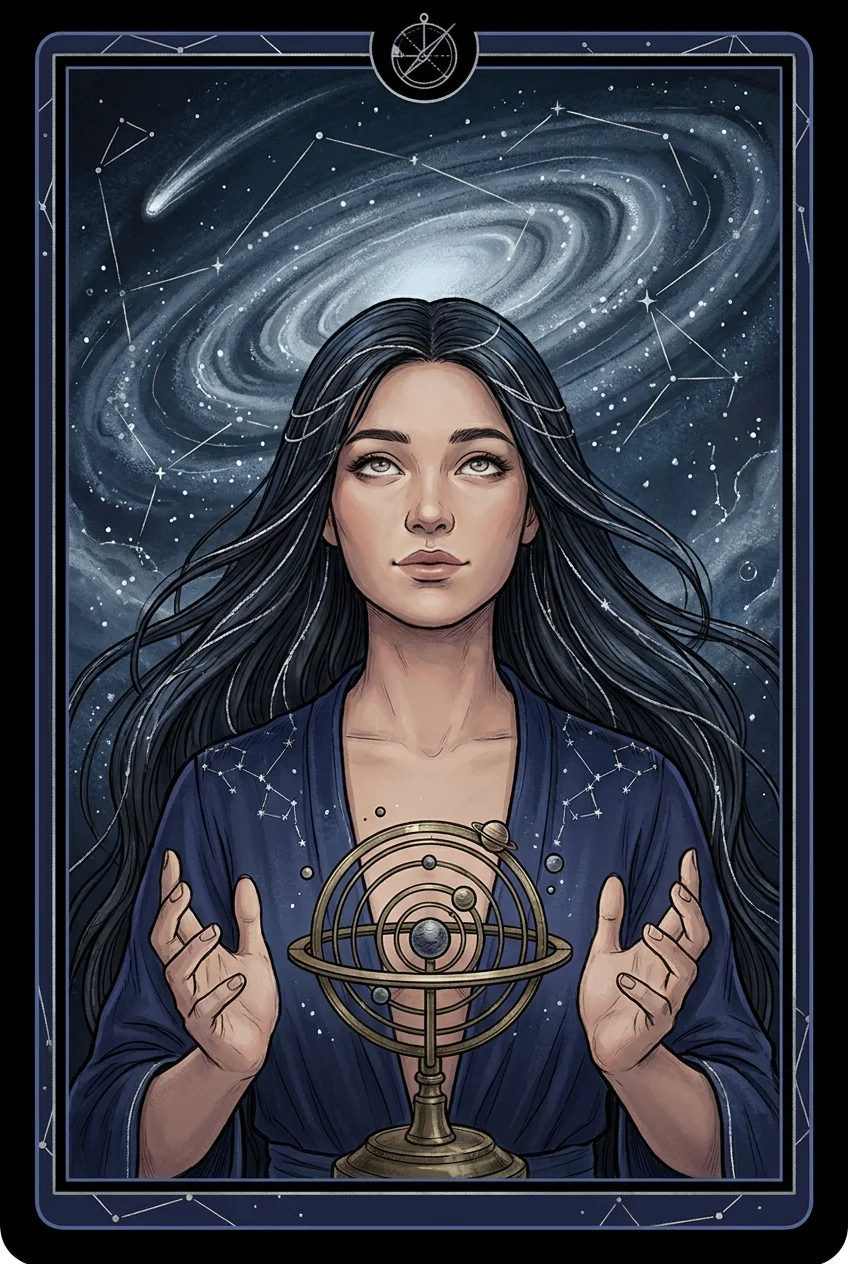
Cosmic Witch
"She doesn't use the stars. The stars use her."
Oriented toward the sky as primary text. Planetary hours, retrograde timing, birth chart as spell architecture — actual mechanism, not metaphor. She will not start anything significant when Mars is opposing her natal Saturn, and she has data on why that's correct.
- →Magic with precise timing — she knows not just what to cast but when
- →Pattern recognition across enormous timescales; nothing surprises her
- →Natal chart as psychological map means deep, specific self-knowledge
Can become paralyzed by timing. Nothing ever happens because Mercury is about to retrograde and Jupiter won't be right until November.
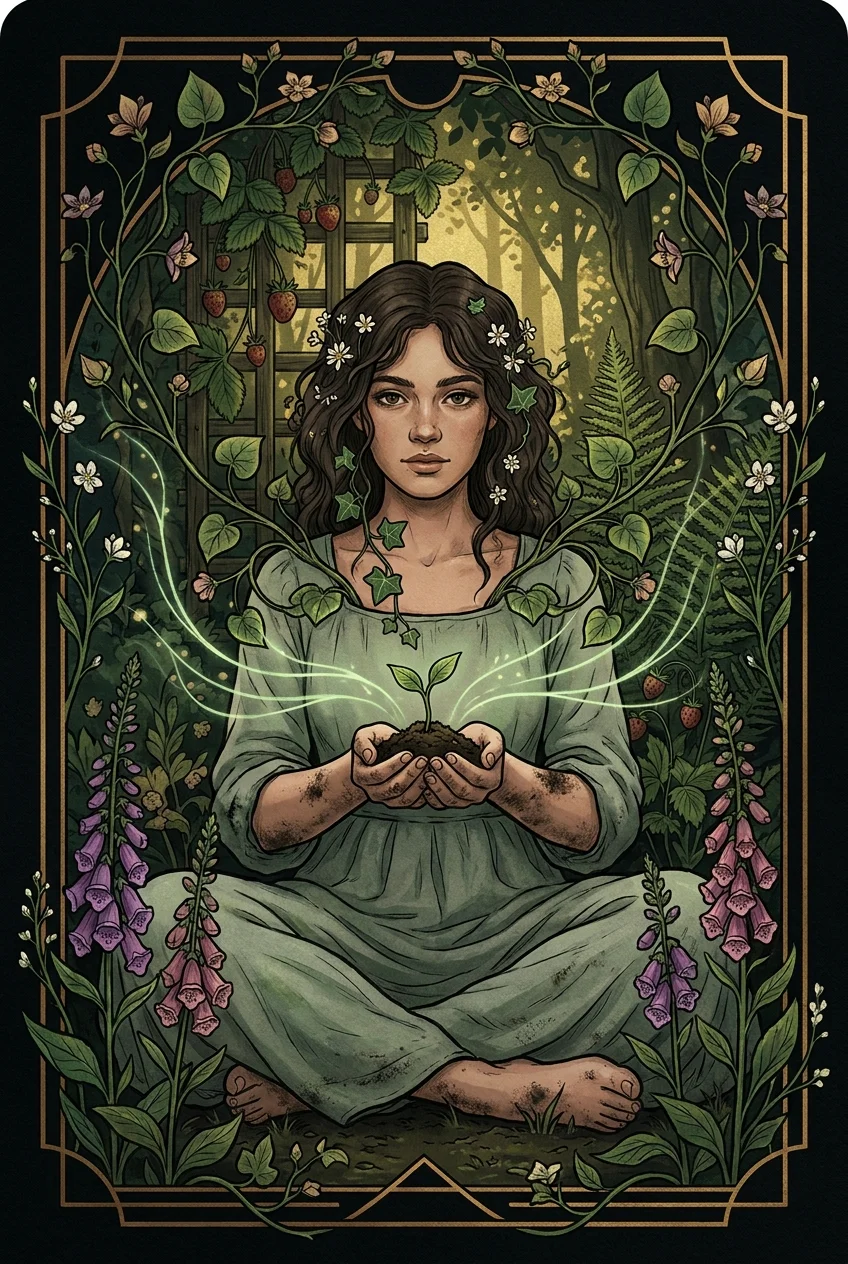
Green Witch
"The garden doesn't separate living from magic."
Works in the language of plants — not symbolically, but literally. Knows what yarrow does in a wound and what it does in a spell and doesn't experience them as different categories. Her practice is phenological: tied to what's blooming, what's dying, what the land is doing right now.
- →Plant knowledge both practical and magical — pharmacopoeia is grimoire
- →Deeply seasonal, deeply local — her practice is about this place, not abstract nature
- →Patient in a way other traditions aren't; she thinks in growing seasons
Can become the witch who only heals others and is unable to apply her own medicine to herself. Or stubborn herbalism that bypasses serious illness.
Witchcraft Vocabulary
The terminology that runs underneath the types. Mastering this vocabulary lets you read witchtok and forum content with real comprehension.
The recognition that everything — stones, weather, places, tools — has its own awareness. Most witches are animists by default, even when they don't use the word.
Liminal trance work where the practitioner crosses 'the hedge' (the boundary between the visible world and the spirit world) to gather information or do work. The signature practice of the Hedge Witch.
Building active relationship with the dead of your lineage. Foundational in Folk witchcraft. Different from spiritualism — the goal is co-laboring, not communication-as-spectacle.
Receiving information through reflective surfaces — water, mirror, obsidian, smoke. A primary divination method for Water Witches.
A drawn symbol charged with intent. Originated in ceremonial magic; popularized in modern chaos magic. Secular Witch territory.
Ritually clearing unwanted energy, presence, or attachment from a space, object, or person. Salt, smoke, sound, sweeping.
The traditional associations between objects and effects (rosemary = protection, basil = prosperity, Tuesday = Mars, etc.). Foundational vocabulary; every tradition has a slightly different table.
Inviting a deity or archetypal force to inhabit the practitioner during ritual. Higher-stakes practice; not casual.
A piece of magic with a specific purpose. 'I did a working last night for protection.' Less performative than 'spell.'
A spirit or practitioner who guides the dead. Hedge Witches sometimes do this work.
The study of seasonal change in plants and animals. Green Witches build their calendar around this.
Doorways, windowsills, the boundary between inside and outside. Magically active points in the home; central to Hearth Witchcraft.
How the Quiz Scores
Each question presents 5 options. Each option carries weighted points to 1–3 specific witch types based on the dimension being tested (source of magic, element affinity, ritual style, daily practice, ancestor work, cosmic timing, etc.).
The witch type with the highest total wins as your primary. The runner-up is shown as your shadow type — the practice running underneath. Eclectic is the default if no type dominates (the tradition was named for exactly that).
Your specific quiz answers go to a generative AI that writes a 200-word reading referencing what you actually said. Not a paragraph from a database — a reading written for you, in this moment.
Tips for an Accurate Read
The quiz scores honestly. A few things to know before you take it.
The quiz scores honestly. If you're a Kitchen Witch but you've been performing Cosmic Witch online because the aesthetic is cooler, the result will reflect the truth of your practice — not your social-media self. That's the point.
If the answer that lands as 'duh, obviously' shows up first, pick it. The quiz is calibrated to read your default state, not your most-considered state. The questions that feel most uncomfortable are often the most diagnostic.
Witches change. The Folk Witch who became a Cosmic Witch through grief and astrology isn't unusual. The Hedge Witch who calmed into a Hearth Witch after motherhood isn't unusual either. Take it twice a year and watch what shifts.
If the result says 'Water Witch with Hedge as shadow,' the Hedge isn't an error. Most witches operate from a primary frame with a secondary frame running underneath. The shadow is what you reach for in private.
What If You Don't Relate to Your Result?
The result lands wrong sometimes. Three reasons that's worth taking seriously:
- •You're mid-transition. Witches change. Many people who get an off-feeling result are between primary types — leaving Folk for Cosmic, leaving Hearth for Hedge. The result captures the recent past more than the future.
- •Your shadow is louder than your primary. If you got Eclectic but the secondary type feels truer, trust the secondary. Eclectic is the default catch-all; if a more specific type is breathing underneath, that's the work.
- •You haven't practiced enough yet to see yourself clearly. If you're early in the work, you're probably still trying on traditions. Take the quiz again in six months. The signal sharpens with practice.
The quiz isn't prescriptive. It's a mirror. If the mirror shows you something you don't recognize, sit with the question rather than the answer.
Frequently Asked Questions
How accurate is this witch quiz?+
It's built on the 10 traditional witch types used by serious practitioners (Eclectic, Folk, Kitchen, Hearth, Secular, Water, Dragon, Hedge, Cosmic, Green). 25 questions sort across 18 different dimensions of practice — source of magic, element, ritual style, daily practice, ancestor work, cosmic timing, and more. Each answer carries weighted points toward 1–3 specific types, so the result is a real signal, not a vibe check.
What makes this different from Buzzfeed-style quizzes?+
After the 25 questions, an AI generates a personalized reading based on your specific answers — referencing what you actually said, not a generic 'you got: Water Witch' paragraph. The reading is written like a witch wrote it, not a marketer.
What if I'm in between types?+
Most witches are. The quiz returns a primary type and a 'shadow type' — the secondary pattern that runs underneath. The Eclectic Witch is the catch-all when no single type dominates: that's not a cop-out, it's the actual tradition.
Can I take it more than once?+
Yes. Witches change. Try it again in six months and compare.
Do I need to be a practitioner to take this?+
No. Many people who take this quiz aren't actively practicing — they're curious about which framework matches their psychology. The result still reads true; whether you do something with it is your choice.
What's the difference between a Folk Witch and a Hedge Witch?+
Folk witchcraft is rooted in ancestral and regional tradition — Appalachian granny magic, Slavic charms, Southern conjure, Italian counterspells. The lineage is horizontal: you carry what your people carried. Hedge witchcraft is liminal — the Hedge is the literal boundary between the village and the wild, between this world and the spirit world. Hedge work is vertical: you cross between layers. Many witches carry both.
Is this connected to the Lore app?+
Each witch type maps to one of Lore's 5 psychological archetypes — Sovereign, Ronin, Oracle, Outlaw, or Muse. Lore is a separate experience: archetype-based daily readings, AI-powered Sage chat, and cinematic portraits of your inner self. Take the quiz first; the app is optional.
Related Quizzes & Guides
- Archetype Quiz — Find your Lore archetype (Sovereign, Ronin, Oracle, Outlaw, Muse)
- Which Goddess Am I — 12 goddess archetypes (Bolen's 7 + 5 dark feminine)
- Aura Quiz — All 10 aura colors with personalized reading
- Spirit Animal Quiz — 37 animal spirits, 28 questions
- What Tarot Card Am I — Match yourself to one of 22 Major Arcana
- Divine Feminine Archetype — Complete guide to the 12 goddess patterns
Take it deeper in Lore
Your witch type maps to one of Lore's 5 psychological archetypes. Daily readings, AI Sage chat, cinematic portraits — the full practice in your pocket.